How to Achieve the Ultimate State of Wellness

How to Achieve the Ultimate State of Wellness

How to Achieve the Ultimate State of Wellness

how to achieve the ultimate state of wellness

Grant Ian Gamble is a best-selling mindful leadership author and speaker. He has over 40 years of experience in leading teams to create innovative customer experiences, building engaged workforces, and developing leaders who prioritize people, workplace well-being, and mindfulness in their approach.

That title should raise some red flags for you immediately.

I mean, who can predict what it would take to achieve the ultimate state of wellness for any individual?

There are commonly held beliefs, a great deal of science and a plethora of information available on the achievement of aspects of wellness, but “The Ultimate State of Wellness”? That’s a very individual and ethereal thing.

There are also a lot of claims around products, diets, lifestyles, philosophies and tools that can supposedly extend the quality and quantity of one’s life, but much of the evidence is anecdotal and at best may help some and have little to no effect on others. 

Therein rests the true intention of this article: To highlight the very personal nature of wellness and reflect on some of the meaningful ways you might explore it for yourself.

I have been a member of the wellness community for over 35 years now. Graduating from flop socks and spandex in the Australian fitness industry, to building wellness campuses up and down the Atlantic Coast of the U.S.

On that journey, I have worked on wellness initiatives ranging from kids’ wellness programming through to geriatric rehabilitation efforts. As my contributions became less granular and I was able to view more population-based programming, my perspective broadened, and I’ll share some of those observations herein.

Wellness has many aspects. Fitness is certainly a part of it, but equally mental health is an incredibly important component. Nutrition is really important, but that can’t overshadow the need for stress reduction and mindfulness practices.

Zig Ziglar, an esteemed author and motivational speaker, had a great infographic I used a lot in the early days of my management career and that was the “Wheel of Life”. 

This wheel illustrated seven aspects of our lives that are meant to contribute to balanced success.

Those elements were: Mental, Spiritual, Physical, Family, Financial, Personal and Career.

What I love about this concept is the balanced nature of it. As I remember Zig explaining, if you rate yourself really well on some of these spokes but not on others, your life is going to be out of balance. He had you imagine your wheel rolling down the road of life with some short spokes and some long spokes, and what a wonky ride it would be! A more literal example would be if you have a strong focus on Career, but don’t take care of your Physical or Mental health, you may not get to enjoy the benefits of the financial gains that come with career advancement.

It’s a pretty simple philosophy with significant implications.

Life coaches have adapted this wheel in many forms and the best known includes: Emotional, Intellectual, Physical, Social, Environmental, Financial, and Spiritual elements.

As much as I love all these elements and feel this is pretty comprehensive, I think it misses some components  that I see as fundamental to achieving ultimate wellness for you as an individual.

Here are the elements I think need to be included in a holistic view of wellness:

  • Sense of Purpose
  • Strong Community
  • Spiritual Center (Connection)
  • Emotional Balance
  • Healthy Relationships
  • Healthful Nutrition, Hydration and Sleep
  • Cognitive Function
  • Conscious Movement
  • Balanced Environment
  • Creative Expression and Play
  • Career Satisfaction
  • Financial Wellness

Zig suggested that balance is at the center of success. I believe it is equally true in the pursuit of wellness. When we place the individual spokes on our wheel of wellness, we are seeking to have each one of them be as long and strong as possible, but not to the detriment of other elements.

So here are the elements I believe go into a balanced wellness profile for anyone:

♦ Sense of Purpose

An incredibly big element of wellness is purpose. When we have purpose, or a reason for being, this can be incredibly fulfilling and healthful. Ikigai, a Japanese word that literally means reason for being, provides a way to help define this incredibly important thread in our lives. The infographic below illustrates Ikigai in a very simple and relatable way.

Ikigai, or this sense of purpose, is a central theme in the Blue Zone community of Okinawa. If you haven’t heard that term before, Blue Zone communities are regions of the

world where an above average number of people live healthier and longer lives than usual.

The term first appeared in a National Geographic cover story in 2005 by Dan Buettner and has been followed by extensive research and initiatives funded by National Geographic to explore this phenomenon.

One of the key findings of Buettner’s work, which was founded on research by Gianni Pes and Michel Poulain, was the determination that the single most important influence on the longevity of the Okinawans is community. In fact, central to every Blue Zones longevity was exactly that – community.

So it seems intuitive that we look at our community relationships, connections, affiliations and contributions when we consider our state of wellness. This is picked up in the Social element of both the Ziglar and the Wellness diagrams, but I feel it needs to be emphasized in our search for our Ultimate State of Wellness.

Strong Community

This is the other side of the social component I’d like to break out and discuss independently.  

In Okinawa, they use the term “Moai” to describe a community group that forms around the individual to provide support ranging from health to spiritual counseling.

The concept of Moai was originally designed to pool the village’s financial resources so if someone needed capital for a project or an emergency, or the village needed some public works completed, they had the resources to help. This concept expanded to become more of a support network, and a cultural tradition for establishing companionship.

In neighborhoods across Okinawa, friends regularly gather to gossip, share advice and experiences, support each other and even provide financial assistance when necessary. They call these groups their Moai

Buettner determined in his research around the Blue Zones that institutions such as the Moai provide social connectedness that help reduce stress, add to people’s happiness and help community members ultimately live longer and stronger lives. Okinawans have their Moais, Sardinians meet with friends for regular happy hours and Adventists in California host weekly meals with their congregation.

Regardless of the location of the Blue Zone, community is the strongest common thread that runs through every Blue Zone Dan Buettner studied. In a recent study of social connectedness and longevity by Harvard Professor Lisa Berkman, she determined that whether it was familial, a tight-knit group of friends, through volunteerism, or some other form of regular social connection, the bond that the group shared was all that mattered in creating greater health and longevity.

community

When we distil the benefits of being a part of a healthy community, the benefits go well beyond longevity. People with a solid support network feel less stressed and generally happier. They are far less likely to develop chronic disease or depression. In general, having strong community ties provides significant benefits for all the participant members.

I encourage you to seek and embrace a community wherever you can. Whether it is building connections through volunteerism, through an interest group, or simply by reaching out to your neighbors, enhanced community connections bring many benefits and wellness follows.

♦ Spiritual Center

Spiritual wellness can be defined as being connected to something greater than yourself and/or having a set of beliefs, morals, principles, and values at your center that provide a sense of purpose and meaning to life. This is particularly true when we use those principles to guide our actions.

It is natural that your spiritual center will usually fluctuate throughout your life. It is also logical that many aspects of overall wellness will contribute to your spiritual wellness, e.g. practicing self-care, being positive and optimistic, volunteering, social connections, and having a sense of belonging.

spiritual center

By growing our spiritual wellness, we gain the power and capacity to make decisions and choices more easily; it provides a foundation during periods of change; and enhances the resilience, grace and inner peace with which we face adversity. 

Having a spiritual foundation in our lives can help us heal when suffering from a physical or mental challenge.

Some measures of spiritual wellness can include having a basis for hope and a place to find comfort during the tough times, having meaning and purpose in your life, being tolerant of other people’s views, making time for personal reflection, and having guiding principles that help direct your actions and decisions.

Some of the ways to enhance your spiritual wellness include practicing meditation or yoga, praying or taking part in organized religion, taking time each day to contemplate life, journaling, spending time in nature, breathing practices and more.

Regardless of the path, finding your spiritual center is a journey and not a destination so don’t forget to stop and smell the roses along the way.

♦ Emotional Balance

Emotional wellness was defined by the Wellness Center of Vanderbilt University as “the awareness of feelings and their expression in a healthy manner with stability of mood, sense of self, positive attitude toward others, and the ability to cope with stress”.

emotional balance

There is no doubt that emotions have a strong influence on your mood, thoughts, attitudes, resilience, decisions and interests throughout your life. 

Your sense of self and in turn your attitude toward others underpins the quality of the relationships you develop.

As we’ve explored previously, if we have healthy and positive relationships with others and a sense of community as a result of these relationships, emotional wellness usually follows. 

One of the biggest components in emotional wellness is balance.

As with all things in balance, different elements counter each other and for example during times of heightened stress, having confidence that this too shall pass will help you navigate those tough times. 

Also, accepting others and forgiving mistakes they may have made allows you to move forward and maintain healthy relationships.  Equally, you need to accept the mistakes that litter your past and move on with a determination to learn and ultimately benefit from these mistakes.

Having a positive mental attitude can contribute greatly to your ability to find the good in people, mistakes and events that may otherwise derail your emotional wellness.

positive mindset

Being aware of and expressing your feelings in healthy ways also reflects your own self-confidence and can create trust in your relationships. Expressing your feelings may limit potential outbursts that come with contained emotions spilling over.

Very few people go through life with complete equanimity, but if we seek ways to positively manage our stress and maintain healthy relationships, levelling out our moods will be a healthy byproduct.

♦ Healthy Relationships

Healthy relationships underpin wellness on so many levels. This often falls under the social category on wellness wheels, but I feel it deserves its own space. Healthy relationships nurture us, complement us, grow us and challenge us, all of which is incredibly beneficial to our overall wellness.

But how do you gauge your relationships? I don’t think volume gives perspective to the wellness benefits we glean from our relationships. The introvert may treasure fewer relationships whereas the gregarious extrovert may see more friends as their happy place.

know thyself

I think the measure of healthy relationships is complex, but regardless of the components, malleability is a key element that relationships demand and exercise in us. We are constantly morphing as humans based on a myriad of influences, both physical and psychological, and both parties need to adapt regularly to keep the rhythm of the relationship flowing.

Other facets of healthy relationships include communication, trust, interdependence (not codependence), respect and support of each other.

I speak to a number of these facets in my book, “The Affinity Principle”. This book is about mindful leadership, which if distilled down, is about building and nurturing healthy relationships with your team and other parties with whom you work.

In essence, maintaining healthy relationships demands flexibility and adaptability.

It demands that we are present and attentive. Maintaining strong healthy relationships is rarely seamless and does require effort, but the benefits of healthy friendships and partnerships far outweigh any efforts we make to meet in the middle.

healthy relationships
♦ Healthful Nutrition (Gut Health) and Hydration

Again, I am intentional in choosing the word “nutrition” over “diet” or such. What our body needs is nutrition, not diet. Yes, diet is common vernacular for what we eat, but the term diet also has a lot of negative connotations, especially for those of us who have gone on diets and failed to maintain or succeed in terms of the diet goals.

I also chose “hydration”, because we may drink a lot of fluids and yet may not be functionally hydrating our body. Drinks like coffee, tea, alcohol, and soda can have a diuretic effect on your body so even though you’re drinking fluids you may not be effectively hydrating your body, in fact in some cases you may actually be dehydrating your body.

Let’s look at nutrition first. Nutrition provides fuel for our body to move and perform its countless functions. That fuel converts to energy and even though the body needs a complex mix of vitamins, minerals, protein, fat and carbohydrates, varied and healthful nutritional choices can provide those components pretty readily.

What is deemed to be healthful nutritional choices will always raise a lot of competing opinions and thoughts, but there are a couple of simple rules of thumb to help steer you in the right direction.

1. Eat low on the food chain. This is a simple way to differentiate between food and foodlike substances. Foodlike substances have been heavily processed and contain a lot of ingredients of which many are unrecognizable to the average person reading the ingredient label.

healthy nutrition and hydration

In fact, the more ingredients a food product has, the less likely it is going to be great for your body. Food in its simplest state is more likely to be good for you than food that has a lot of additives and has  gone through a lot of processing and refinement. Our bodies typically love vegetables, fruits, whole foods and foods rich in fiber. Most of us are aware of what foods are healthy and making more healthy choices over time will pay great dividends.

2. Eat a variety of foods. Diets that promote one food to lose weight are not sustainable and are unlikely to succeed. At the simplest level, your body will not get the requisite vitamins, minerals and components needed for balanced nutrition when you consume a very limited array of foods.

3.  Eat smaller portions. What I mean by this is to spread your nutritional input out and avoid big meals where possible.

I believe eating too much in a sitting, especially at night, is tough on your body so I recommend eating small meals throughout the day.

4. Try and keep your input balanced against your output. Meaning, if you exercise a lot, eat more. If you don’t do a lot of exercise, eat less. Your body will seek balance and if you listen to it, you can usually feel when you’re out of balance.

5. That leads me to my last point on nutrition. Avoid the scales. Judging your state of health or wellness by the scales is fraught with peril. I suggested in the previous point to listen to your body. Too often we ignore our body’s many signals and sometimes warnings because we don’t listen to how we feel. Those are hard things to grasp when we’ve ignored our body’s many cries and too often listened to its cravings. Simple examples of listening to your body would be if you feel energetic, that’s a good sign. If you feel lethargic, that’s probably a bad sign.

hydration

Speaking of lethargy, very often we can feel lethargic when we are dehydrated.

Hydration is critical to all bodily functions and when we are well hydrated, our sleep, cognitive function and mood can all improve.

Hydration of the body is crucial for many reasons. It helps regulate our body temperature, deliver nutrients to cells, provide joint lubrication, and allows our organs to function effectively.

All these things can help improve our energy, promote healthy weight loss, improve skin tone, remove toxins from our system, and help keep us regular.

When it comes to choosing what to drink water is the stand out. Obviously water is in many drinks, but other components in those drinks, such as sugar, caffeine and alcohol can offset the hydration benefits of the water by itself. 

There are also a lot of mixed opinions about sports drinks. When we dehydrate we also lose electrolytes, especially sodium.

Even though many sports drinks have sodium and other electrolytes added, they can also contain sugar, artificial colors, flavors and additives. Mineral water usually contains sodium and can be a refreshing drink as well as replace some of the sodium lost during activity. Pure coconut water is also a great alternative electrolyte drink that doesn’t contain any unwanted ingredients.

The level of your activity and many other factors influence the amount of water you need, but if you feel lethargic, have a headache, or dry mouth, then you should try drinking more water. Instead of defaulting to a cup of coffee when you’re feeling tired, maybe try a glass of water and see if you feel the difference.

Essentially, we should drink plenty of water each day, and that may constitute 8-10 glasses or so. 

Your body is an incredibly powerful system that will work very well, given the right ingredients.

When you’re thoughtful about your food and water intake, you’ll notice a positive difference in many aspects of your life.

cognitive function
♦ Cognitive Function

I have chosen cognition over intellectual, or mental, or other possibly more recognizable terms. I’ve done this because I think “intellectual” is a term often used to refer to someone who has above average intelligence, and “mental” comes with its own set of connotations. 

Whereas cognitive function covers the processes I think we should be attributing to the proper functioning of our brain, including gaining knowledge and comprehension.

Things like thinking, knowing, memory, judgment and problem solving are critical cognitive functions. Language, creativity, perception and planning are all higher-level cognitive functions that are essential in our wellness equation.

We should be treasuring and nurturing these processes by challenging and stimulating our mind constantly.

For me, reading and writing are great ways for me to improve my language and in turn express my thoughts. Just as our food choices impact our bodily functions, what we read matters, too.

Ultimately, what we feed into our mental furnace will determine the quality of the output. 

Equally, when we challenge our mind with new ideas, synthesizing information and integrating this with new knowledge, our brains fire up in positive and fruitful ways. Much like our muscles, when we exercise our brain, it gets stronger.

The retention of this knowledge and learning is also critical. With memory impairment at epidemic levels, we must consciously exercise this cognitive function and give our brain the nutrients and environmental stimulation necessary to maintain optimal memory where possible, especially in our later years.

be present

Additionally, using our senses fully to perceive information and interact with our environment are both cognitive functions.

So often, our senses become dulled and limited by lack of use.

When we consider how people with an impaired sense attune their other senses to bridge the gap, we realize the potential each sense has to provide invaluable feedback about the world around us.

One cognitive function that appears to be waning at a cataclysmic rate is that of attention, or focus.

I have struggled on some level with ADHD my entire life. When I was a kid, I was seen as full of energy and hard to contain, or inattentive.

Knowing now that I have an attention deficit, I have worked diligently to exercise focus and improve my ability to be present.

With the onslaught of attention-grabbing bites of information swirling past us at incredible rates, it is no wonder that attention deficit has risen to epidemic proportions.

Avoiding or slowing this cacophony of tantalizing tidbits is tough and so exercising our ability to focus on a conversation, a task, or even a thought process is critical. Becoming aware of this challenge was the first step for me. Exercising my attention muscle remains challenging, but fulfilling when I can minimize the number of intermissions my brain takes in any given process.

sleep

One other process I feel we need to nurture for cognitive wellness is thought.

Thought is critical to decision making, creativity, problem solving, reasoning, visioning and more. Be a thought leader in your own right. Stretch your imagination, build your problem-solving prowess, engage in cerebral ruminations and welcome discussions and debates with friends, family and colleagues as intellectual pursuits that will help all involved build their cognitive wellness.

Last, but not least, I want to touch on the strongest factor in nurturing healthy cognitive function – sleep.

Quality, rhythmic sleep is critical to rejuvenate and maintain good cognitive wellness.

I have worked with people who were incredibly sleep deprived and witnessed the debilitating effect lack of sleep can have even on highly functioning individuals.

Yet, getting good sleep has become more and more elusive for many people. Given that we often spend more time sleeping than any other single activity we need to give it due reverence.

When we sleep, we heal.

When we sleep, we rejuvenate. When we sleep, our bodies and our minds renew and rebuild. To me, good sleep is one of the non-negotiables for health and ultimate wellness. To this end, I have written a separate article on sleep, which dives deeper into this critical part of wellness. 

conscious movement
♦ Conscious Movement

I choose the word “movement”, because exercise and fitness activities bring up negative connotations for many people. I’m not trying to disguise exercise, but do want to reframe it.

Our bodies are designed to move and every time we get up, sit down, go up a set of steps, or walk to the corner store, we are moving and in turn exercising.

Being conscious and taking advantage of these inherent opportunities to move during our everyday activities is hugely beneficial. The worst thing we can do for our overall wellness is to stop moving. Often, when an elderly person has an accident and for example breaks a hip, this can be a death knell for them, simply because they stop moving for an extended period of time and their body suffers.

When I began in the fitness industry, aerobic exercise was in vogue and the more you did and more intense the exercise was, the better.

Much research and learning has transpired between then and now and we now know that exercise can be beneficial in small amounts and light doses.

My strong recommendation is simply to move regularly, choose to walk where you have the choice, choose to take the steps and not the elevator, find ways to incorporate movement throughout your day and you will benefit from these small changes in how you approach movement.

If you choose to move more by finding a form of exercise to do, choose something that is as enjoyable as possible for you.

If you can’t find any form of exercise that you find palatable, then find a reason to motivate movement in spite of your reticence.

movement

An example would be getting a dog. If you need to walk the dog multiple times a day so that it can do its business and get some exercise, this can be a formidable addition to your daily movement patterns.

A few of tips I would add to moving as much as possible:

1. Aim for some variety in the movement you choose. This is good for your body and for your mind. As they say: “Variety is the spice of life”.

2. If you’re just starting out, start out slowly. Be kind to yourself and your body by building your movement over time. Going too hard, too soon, often leads to unnecessary soreness and fatigue.

3. Try and put some movement options in your mix that are not weather dependent. This offers a better opportunity to maintain some movement during inclement weather.

4. If you like keeping score, track your movement. Whether you use an app or device to track your steps, record your miles on the bike, or simply journal your movement activities, if this helps motivate you, just do it.

5. Lastly, I really recommend finding an exercise partner, group, or option where you may add a social component to your exercise. This can also help motivate you on the tough days and may help you add to your community.

SIDE NOTE: As much as moving often is incredibly beneficial, having restful sleep is complementary to movement. In fact, moving more will improve the quality of your sleep and enjoying  good sleep will benefit your desire and ability to move.  

THE DONUT ECONOMICS MODEL

Grant Ian Gamble Business Consulting | Author | Speaker | Coach | The Affinity Principle | Blog | Simple Management Practice to Elevate Your Leadership | MBWA

Source: Kate Raworth

♦ Balanced Environment

What we surround ourselves with, where we choose to live, the conditions we create or that we are ensconced in, extending from our home out to the planet at large, describes the environment in which we live.

When considering that very broad definition, I have found that the

Donut Economics Model provides a great template for reviewing and balancing human and planetary environmental factors.  

Kate Raworth, the author of “Donut Economics”, describes these planetary environmental boundaries thus:

“The environmental ceiling consists of nine planetary boundaries (climate change, ocean acidification, stratospheric ozone depletion, disruption of the nitrogen and phosphorus cycles, global freshwater use, land use changes, biodiversity loss, aerosol loading in the atmosphere, and chemical pollution), as set out by Rockstrom et al, beyond which lie unacceptable environmental degradation and potential tipping points in Earth systems.”

Raworth added the human wellbeing dimensions, drawing on the United Nations’ 17 sustainable development goals (SDGs) to transform our world, which are derived from internationally agreed upon minimum social standards.

environmental balance

Raworth’s 12 dimensions included quality food, clean water and sanitation, good health and wellbeing, quality education, gender equality, affordable and clean energy, decent work and economic development, social equity, quality housing, social network, peace and justice, and political voice.

She concluded that:

“Between social and planetary boundaries lies an environmentally safe and socially just space in which humanity can thrive.”

This seems most apt as a way to encapsulate our own sense of what a balanced environment should look like for us. 

When considering our environment we obviously must start in our own backyard, but our awareness and actions must extend out to the planetary boundaries Raworth drew upon for her model.

Our environmental wellness is tenuous at best when we ignore our impact on the planet that we live on.

creativity
♦ Creative Expression and Play

One of the differentiating characteristics of humans from other species is our ability to be incredibly creative.

I believe that in order to thrive, each of us must seek an outlet for creative expression in our lives. 

Many of us feel that we don’t innately possess the creative gene, but in truth we all have creativity wired into us. As humans, we are hardwired to solve problems and that in its simplest form involves creativity. From a very early age, we are curious and creative. We constantly solve the mysteries of the world around us and are not afraid of making mistakes.

Over time, this  creative drive is whittled away by external forces; 

fear often replaces wonder and we end up pigeonholing creativity as the domain of the artist or musician.

Yet, in its simplest form we are actually being creative every day when we choose the clothes we’re going to wear, the route we’ll take to work and even what we’ll cook for dinner. From a neuroplasticity standpoint the more we vary these things, for example our route to get to work, the more we stimulate the creative elements of our brain.

Being open to new possibilities, remaining curious about the world around us, and being willing to make mistakes and accept that they are the ultimate learning tool are all prerequisites to igniting creativity within. If we embrace these attributes, creativity and its many benefits will follow.

jana gamble art studio

In the next section on Career Satisfaction, I mention Mihaly Csikszentmihalyi, and the state of “Flow”. This state is a wonderful byproduct of the creative journey. Flow is achieved when we are immersed in an activity and time and distractions disappear. Most often, this state is one that is achieved when we are being creative. 

Csikszentmihalyi wrote extensively about Flow and in one of his works,  “Creativity: The Psychology of Discovery and Invention,” he defines creativity as,

“ . . . a central source of meaning in our lives . . .  most of the things that are interesting, important, and human are the results of creativity . . .  [and] when we are involved in it, we feel that we are living more fully than during the rest of life.”

This sums it up pretty well. Whether you’re tinkering in your garage fixing an old piece of equipment, molding some clay, drawing, gardening, or even building a sandcastle on the beach, when creativity is flowing, so are you.

SIDE NOTE: A few years ago, my wife, Jana, was encouraged to explore her creativity in order to help heal from a chronic pain condition. She was a creative professional, but wasn’t creatively expressing herself outside of her work. She began tinkering with paint and canvases and seeking a medium through which to express herself. The number of cast aside canvases and attempts at new creative mediums mounted and so did her creative juices.

Amazing works of art started flowing from her and we ended up building an art studio to allow her to continue to create. Now, she has commissioned works, shows in galleries, and sells (and gives away) many pieces.

But the journey was not about selling her art, it was about creativity. For her, it proved to be a very powerful healing tool. She demonstrated what I am encouraging you to do.

Be willing to make mistakes, explore without fear, play with abandon and many wonderful things will ensue.

flow state
♦ Career Satisfaction

This topic is partially included in the element of Purpose, but deserves some specific focus as it may account for a significant part of your life.

As we explored in the infographic for Ikigai,

balancing what you are good at and love doing with the ability to earn money and cover your needs is a delicate dance. 

Very often, we find ourselves out of balance when we’re not making enough money to be relatively free of stress (even if we’re doing something we love), or alternately making a lot of money but with no joy attached to that pursuit.

Some people are blessed with finding their life’s purpose in a career that bears fruit, whereas others wander many paths without unraveling this mystery over the course of their lifetime.

Choosing the career path that will bring the most fulfilment for you is not easy.

Occasionally, you will meet people who always knew what they wanted to be, but more often people struggle to find that sweet spot that gives them career satisfaction and financial fulfilment.

Most importantly, know thyself. If you can make a difference doing something that you are gifted to do, or have a particular forte in, work can become easier and more fulfilling.

In my book, “The Affinity Principle,” I talk about a concept called flow.

The flow state was defined by Mihály Csíkszentmihályi as a state of complete immersion in an activity.

While in this mental state, people are completely involved and focused on what they are doing. When this occurs in our chosen career, it is an incredible gift. 

You can chase the perks, status and salary, but if what you do doesn’t resonate within you, finding that Zen state of flow will likely be an elusive goal.

financial wellness
♦ Financial Wellness

Wellness in any realm requires balance and a holistic approach. Financial wellness is no different and as with the other elements, one size does not fit all. Wealth does not directly correlate to financial wellness. When measuring your financial wellness, you need to consider factors such as:

  • Are you suffering from, or relatively free of financial stress?
  • Are you making improvements to your financial wellness by saving more, reducing debt, and/or budgeting?
  • Do you have, or are you building, financial knowledge that helps guide your financial behaviors?
  • Do you have a financial plan to reach your desired state of financial wellness? 
  • What is your overall level of personal satisfaction with your current finances?

These are some simple guides you can use to review your financial wellness. Most importantly, keep your financial wellness in perspective. It is not directly proportionate to your net worth; it is directly proportionate to your overall level of personal satisfaction with your current finances.

SIDE NOTE: In studies, it has been determined that the level of happiness a person experiences elevates with income up to a certain point. Researchers have found that happiness doesn’t change much once that threshold of income has been reached. Andrew T. Jebb, the lead author on a study that defined these thresholds across the world said,

“There’s a certain point where money seems to bring no more benefits to well-being in terms of both feelings and your evaluation.”

financial wellness
♦ Conclusion

When we focus on these fundamental elements and consciously try and advance those areas where we lack balance or struggle in our day to day, these efforts will also be rewarded in other areas of our lives.

When we move more, inevitably we tend to feel better about ourselves. Often, with movement, improved nutrition will follow. If we consciously nurture our relationships, community may build behind these enhanced connections, and so forth.

Simply taking stock and applying some of this knowing can begin to shift the momentum in our lives.

Change will come incrementally at first, and grow on these foundations of self-awareness. 

When we approach this process knowing that it is a process, small changes build on each other and can create substantial positive change over time. Setbacks are inevitable, but by maintaining a positive mindset around the change you seek, momentum will grow. As you build and balance these elements, unanticipated rewards will follow. 

Related:

“How to Improve Your Quality of Life by 33% Today”

“What Does a Healthy Community Look Like Beyond COVID?”

“Wellness Real Estate Return On Wellness (ROW) = Return On Investment (ROI)”

“Does Our Built Environment Affect Our Relationships?”

Fill out the form below and receive a PDF download of "6 Key Strategies to Engage Untapped Fitness and Wellness Market Segments"

Let's Connect!

CUSTOMER EXPERIENCE, TEAM ENGAGEMENT & WORKPLACE WELL-BEING: AFFINITY OS™ | WELLNESS INTEGRATION | MINDFUL LEADERSHIP: "THE AFFINITY PRINCIPLE"

0475 866 592
Grant Ian Gamble Business Consulting | Author | Speaker | Business Consultant | Coach |The Affinity Principle | Best Seller Logo

The Affinity Principle™ by Grant Gamble presents a formula for business success through a people-centric, mindful leadership approach.

PEOPLE FIRST, ALWAYS.

Simple Management Practice to Elevate Your Leadership

Simple Management Practice to Elevate Your Leadership

Grant Ian Gamble

Grant Ian Gamble is an international business strategy and growth consultant, best-selling mindful leadership author and speaker. He works in a broad array of industries helping companies build teams, navigate change and drive growth.

Studies show that positive feedback needs to be delivered at a ration of 6:1 in order to counterbalance constructive feedback.

While one does not equal one in the feedback stakes, you can’t stay on course without giving constructive feedback.

So how do you deliver all these positive pieces of encouragement when you’re deluged by emails and all the trappings of leadership that weigh you down on a daily basis?

Tom Peters talks about MBWA (Management by Wandering Around) in his book In Search of Excellence. He presents a great methodology to employ when seeking to catch your team members up to good things. It’s also a great way to get up and stretch your legs and see what’s really happening beyond the walls of your office.

MBWA refers to a management practice of spontaneous and unstructured visits on team members, departments, and locations.

Because these visits are unexpected, the team members who are focused on their tasks and responsibilities will become apparent (especially over time) and the “show ponies” (those people that wait till someone’s watching to make an effort) will equally become evident. The real magic is in gathering regular and robust data points.

Grant Ian Gamble Business Consulting | Author | Speaker | Coach | The Affinity Principle | Blog | Simple Management Practice to Elevate Your Leadership | MBWA

Be aware that random sampling can create some distortions that can only be corrected through continued diligence. MBWA is best applied generously! It is also important to make this non-routine activity a part of your routine.

In other words, you need to get out regularly to visit your team at various times of the day, and night (depending on your line of business).

When I managed businesses that operated 7 days a week over extended hours, I found that some of the most magical moments happened outside of my office hours. Being greeted by that bright and cheery ‘early opener’ at 5:25 AM in the morning was a treat. The act of opening the doors of a health club for those early morning exercisers was a delight in the right hands or a disaster in the hands of someone who’s not a morning person.

Catching that Manager on Duty jump-starting a customer’s car at 10pm at night was a magic moment not to be missed. The appreciation from that poor soul that had left their lights on probably eclipsed all my platitudes, but just getting to witness these acts of genuine kindness reinforced my need to be out and about catching my team doing great stuff!

Grant Ian Gamble Business Consulting | Author | Speaker | Coach | The Affinity Principle | Blog | Simple Management Practice to Elevate Your Leadership | MBWA

When I was managing a company that was shipping tens of thousands of items monthly, my regular visits to the shipping team was likely a welcome respite from the repetitive tasks that team handled, but it always offered great insights for me into the heartbeat of our company.

There are so many intangible benefits to be gleaned from these connections with your team. I have come to appreciate MBWA in all of my leadership roles.

Grant Ian Gamble Business Consulting | Author | Speaker | Business Consultant | Coach |The Affinity Principle | Best Seller LogoWant to learn more simple and effective ways to elevate your leadership? Pick up your copy of my new mindful leadership book, “The Affinity Principle.”

Want to Know Your Leadership Potential? Take this Leadership Appraisal!

The Affinity Principle Leadership Appraisal is a free benchmarking tool for you and your leadership team to gauge your individual and collective propensity to create Affinity within your organization.

The Leadership Appraisal is based on key questions asked of over 6,000 senior executives across the world in the Globe 2020 Report of CEO Leadership Behaviors and Effectiveness. These questions break down into 8 primary leadership dimensions that most influence top management team’s dedication and overall firm performance.

Go
Fill out the form below and receive a PDF download of "6 Key Strategies to Engage Untapped Fitness and Wellness Market Segments"

Let's Connect!

CUSTOMER EXPERIENCE, TEAM ENGAGEMENT & WORKPLACE WELL-BEING: AFFINITY OS™ | WELLNESS INTEGRATION | MINDFUL LEADERSHIP: "THE AFFINITY PRINCIPLE"

0475 866 592

Grant Ian Gamble Business Consulting | Author | Speaker | Business Consultant | Coach |The Affinity Principle | Best Seller Logo

The Affinity Principle™ by Grant Gamble presents a formula for business success through a people-centric, mindful leadership approach.

PEOPLE FIRST, ALWAYS.
How and When to be a Diplomatic Leader in Order to Foster Collaboration

How and When to be a Diplomatic Leader in Order to Foster Collaboration

How and When to be a Diplomatic Leader in Order to Foster Collaboration

Grant Ian Gamble Business Consulting | Author | Speaker | Coach | The Affinity Principle | Blog | How and When to be a Diplomatic Leader in Order to Foster Collaboration

Grant Ian GambleBy Grant Ian Gamble | August 26, 2020

Grant Ian Gamble is an international business strategy and growth consultant, best-selling author and speaker. He works in a broad array of industries helping companies build teams, navigate change and drive growth.

The consummate leader needs to be both a diplomat and a truth-teller, and those things don’t always line up perfectly.

It is the role of the leader to guide their company and often, that involves smoothing the waters and sometimes delivering bad news.

The skills of the diplomat are those of sensitivity toward the stakeholders and finding a navigable path when things get bent out of shape. The diplomat needs to balance often disparate needs to find a resolution.

The diplomat is also the integrator who attempts to get everyone playing together in the sandbox and help engender cooperation and collaboration.

Grant Ian Gamble Business Consulting | Author | Speaker | The Affinity Formula | 5 Steps to Re-Imagine Your Business Post COVID-19

As much as dedicated and high performing teams cite diplomacy as a preferred behavior for their leaders, the diplomatic approach comes with some challenges. As I suggested earlier, it can cause the leader to hold back on delivering truth bombs when candor may potentially lead to a better ultimate outcome.  These compromises can blur the lines at times.

The other downside of the diplomatic style is that oftentimes, taking a more diplomatic route can increase time to resolution. This is usually the case because the diplomatic leader  needs to work with all stakeholders. Taking the time to reach out to, and often revisit, all the players doesn’t usually happen quickly, but can help amplify Affinity.

I personally think the diplomatic style can be incredibly important in organizations seeking integration and collaboration. However, it’s not always the best style in start-ups, early-stage, and fast-moving organizations.

Grant Ian Gamble Business Consulting | Author | Speaker | Coach | The Affinity Principle | Blog | How and When to be a Diplomatic Leader in Order to Foster Collaboration | Puzzle

Want to Know Your Leadership Potential? Take this Leadership Appraisal!

The Affinity Principle Leadership Appraisal is a free benchmarking tool for you and your leadership team to gauge your individual and collective propensity to create Affinity within your organization.

The Leadership Appraisal is based on key questions asked of over 6,000 senior executives across the world in the Globe 2020 Report of CEO Leadership Behaviors and Effectiveness. These questions break down into 8 primary leadership dimensions that most influence top management team’s dedication and overall firm performance.

Go

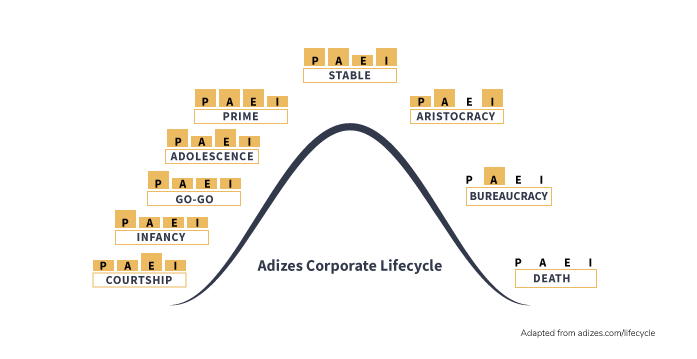
The Adizes Model

Ichak Adizes places great importance on the integrator, or diplomat, and sees them as critical to a company’s drive to prime (optimal performance).

Adizes developed a model of the life-cycle of a business and profiles the different styles of leadership needed at each phase of a company’s evolution.

Adizes argues that there are four basic roles that are needed in all organizations, in varying degrees, at various points in a company’s evolution: Producer (P), Administrator (A), Entrepreneur (E), and Integrator (I).

People don’t fit exactly into one of these, but usually are a mixture of them:

g

Adizes’ 4 Basic Roles

THE PRODUCER

Organizations exist to produce results. The results being produced may vary depending on the organization, but they all exist in order to satisfy customer needs. The Producer is typically very delivery focused. They work long hours to ‘do it now’ and tend to believe that hard work solves everything.

THE ADMINISTRATOR

While the Producer focuses on what to do, the administrator focuses on how things should be done. The administrator undertakes activities that are directed at getting things organized, planned, scheduled, systematized, and generally under control by capturing the learning curve about how to do things right in processes, procedures, and systems.

THE ENTREPRENEUR

Entrepreneurs embrace change and inspire those around them. They are focused on creating new opportunities or responding to threats. Entrepreneurs are more willing to believe in visions and take significant risks, whilst using story-telling and other techniques to bring others along with them.

THE INTEGRATOR

Integrators are reliable, trustworthy, warm, and caring. The Integrator role focuses on the development of teams who can make the organization efficient over the long term. Integrator Managers often develop persistent cultures of mutual trust and mutual respect.

Source: adizes.com

The model below illustrates the varied emphasis needed from these roles as the company matures and ages.

To me, the diplomat is the Integrator.

As you can see in the model illustrated below, the ‘I’ comes into their own, focusing on cooperation and collaboration of the team as the company matures and the fast-paced chaos of the early stages disappears into the rearview mirror.

I have served as the Integrator in many roles, helping at times manage interpersonal, interdepartmental, supplier and customer relationships. All of these roles require diplomatic skills.

An integrator can be thought of as a Chief of Staff. They aim to foster improved communications up and down the organization and create Affinity. Much like a diplomat they need to be aware and responsive to the needs, views, motivations and conflicts at play.

The integrator considers all the stakeholders and tries to align interests and concerns.

Grant Ian Gamble Business Consulting | Author | Speaker | Coach | The Affinity Principle | Blog | How and When to be a Diplomatic Leader in Order to Foster Collaboration | Adizes Corporate Lifecycle

The integrator aims for collaboration, cohesiveness and unification.

It is also the job of the integrator to help build teams, and drive toward the shared vision and intrinsic purpose.

And the integrator is uniquely aware of the interpersonal and group interactions and dynamics and works to build the organic functionality of the organization.

Grant Ian Gamble Business Consulting | Author | Speaker | Coach | The Affinity Principle | Blog | How and When to be a Diplomatic Leader in Order to Foster Collaboration | Integrator
Fill out the form below and receive a PDF download of "6 Key Strategies to Engage Untapped Fitness and Wellness Market Segments"

Let's Connect!

CUSTOMER EXPERIENCE, TEAM ENGAGEMENT & WORKPLACE WELL-BEING: AFFINITY OS™ | WELLNESS INTEGRATION | MINDFUL LEADERSHIP: "THE AFFINITY PRINCIPLE"

0475 866 592

Grant Ian Gamble Business Consulting | Author | Speaker | Business Consultant | Coach |The Affinity Principle | Best Seller Logo

The Affinity Principle™ by Grant Gamble presents a formula for business success through a people-centric, mindful leadership approach.

PEOPLE FIRST, ALWAYS.

How to Transcend Troubling Times

How to Transcend Troubling Times

How to Transcend Troubling Times

Grant Ian Gamble Business Consulting | Author | Speaker | Coach | The Affinity Principle | Blog | Transcending Troubling Times

Grant Ian GambleBy Grant Ian Gamble | August 18, 2020

Grant Ian Gamble is a business growth consultant, executive coach, author and keynote speaker. He works in a broad array of industries helping companies build teams, navigate change and drive growth.

According to Business Insider, unemployment filings hit 55 million over the past 20 weeks.

Layoffs, furloughs, freezes on hiring and downsizing are all reaching epidemic proportions. Usually, downsizing and consolidations are associated with declining financial performance for the companies going through these transitions, but not necessarily.

According to Kim Cameron, a researcher at the University of Michigan, companies that were downsizing AND characterized by virtuous practices – for example, forgiveness, compassion, integrity, trust, optimism, kindness – tended to avoid the declining performance usually associated with major consolidation.
In a study across 16 industries, all of which had cut staff, Cameron’s research demonstrated that organizations scoring higher in virtuousness were significantly more profitable, and also achieved significantly higher performance in returns to shareholders, productivity, and customer satisfaction*. 
Grant Ian Gamble Business Consulting | Author | Speaker | Coach | The Affinity Principle | Blog | Transcending Troubling Times | Core Values

In these unprecedented times, fear pervades every segment of the business community.  Every executive and business owner I work with has very real fears for their companies and their people.

When fear surrounds us as it does today, it is easy to let it distort our priorities and influence our better judgement.

As we work through strategies to pivot, re-engineer or sometimes consolidate, it remains critical to keep the moral fiber of the company intact and act with integrity and transparency.

In my book, “The Affinity Principle, I describe how important being present and communicating empathetically is when stress levels are peaking.

Our Tough Time

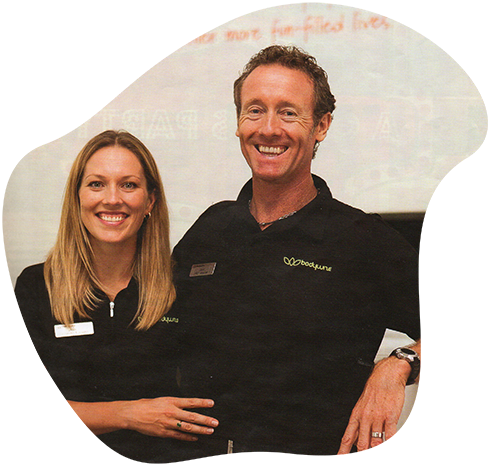
On the heels of the Global Economic Crisis in 2008, my wife and I purchased a company that turned out to be financially misrepresented (a nice way to say that the books were cooked. Actually, they were burned to a crisp!). With massive losses suddenly appearing on the balance sheet, we had to pivot and consolidate immediately. This involved closing one location, renegotiating with landlords,  consolidating staffing, and shifting our focus from thriving to surviving.

Over the course of 18 months, we turned that company around and we credit that turnaround to maintaining our integrity, transparency, and communicating with all the stakeholders constantly. We had completely open book conversations with our landlords and vendors, we shared everything with our team, we offered up trust, compassion and optimism in liberal doses. 

And in that whole turbulent time, no team member missed a paycheck, no vendor was gipped, and the landlords were ultimately made whole. 

We look back on that time with incredulity and realize that maintaining those values which we went into the business with was actually our greatest achievement. 

Grant Ian Gamble Business Consulting | Author | Speaker | Coach | The Affinity Principle | Blog | Transcending Troubling Times | Core Values | Our Tough Time

So, if you’re facing tough decisions or seemingly insurmountable challenges from this current global crisis, I encourage you to hold true to those values that have made you who you are today. Step back from the fray and look on with compassion, empathy and fortitude. By elevating your communications and maintaining your optimism, you can help guide your organization out of these turbulent times.

*  Virtuousness and Performance: A Productive Partnership, Prof. Kim Cameron – Ross School of Business

Fill out the form below and receive a PDF download of "6 Key Strategies to Engage Untapped Fitness and Wellness Market Segments"

Let's Connect!

CUSTOMER EXPERIENCE, TEAM ENGAGEMENT & WORKPLACE WELL-BEING: AFFINITY OS™ | WELLNESS INTEGRATION | MINDFUL LEADERSHIP: "THE AFFINITY PRINCIPLE"

0475 866 592

Grant Ian Gamble Business Consulting | Author | Speaker | Business Consultant | Coach |The Affinity Principle | Best Seller Logo

The Affinity Principle™ by Grant Gamble presents a formula for business success through a people-centric, mindful leadership approach.

PEOPLE FIRST, ALWAYS.

Strategies to Follow as You Re-Open or Re-Imagine Your Business in the New COVID-19 Reality

Strategies to Follow as You Re-Open or Re-Imagine Your Business in the New COVID-19 Reality

Strategies to Follow as You Re-Open or Re-Imagine Your Business in the New COVID-19 Reality

Grant Ian Gamble | Author, Speaker, Business Coach | Blog | Pivoting and Adapting Business to the New COVID-19 Reality | Header Image

Grant Ian GambleBy Grant Ian Gamble | July 15, 2020

Grant Ian Gamble is a business growth consultant, executive coach, author, and keynote speaker. He works in a broad array of industries helping companies build teams, navigate change and drive growth.

A monumental shift in the trajectory of the global economy usually happens over time and is forecast to a greater or lesser extent.

The COVID-19 Pandemic almost instantaneously upended businesses across the global community with little warning or opportunity to prepare. 

Adapting and pivoting your business to the new reality of an upturned world can be daunting when there are very few precursors to many of the challenges this pandemic has created.

Here are some basic strategies and checklists to follow as you plan to re-open and/or re-imagine your business. To download this list, click the button below.

N

Strategies and Checklists to Follow as You Re-Open or Re-Imagine Your Business

Build a Re-Opening Strategy

  • This will be a day-by-day, week-by-week, month-by-month living document.

  • Map out the customer journey to look at all contact points to understand what changes and modifications are needed.

  • Determine the adjustments needed to reduce risk and maximize the ‘new’ customer experience and lay out a path to that point.

  • Ensure this strategy is a lateral extension of your pre-pandemic plans wherever possible to align your capabilities with the pivot (minimizing additional infrastructure where possible).

Reimagine your business by leveraging longer-term trends created by the pandemic. Some of the trends that indicate they’ll be around a while include:

  • A shift to more local sourcing and shorter supply lines; 
  • A general downshift in retail; 
  • A significant reduction in commuting; 
  • Dramatically increased online spending and utilization; 
  • Social distancing; 
  • Increased demand on technology; 
  • Substantial shift to work from home models; 
  • Increased recreational time; 
  • A shift from large group activities to small group activities;

These are just a few layers of our New World Order:

  • Communicate really well. This is probably the biggest differentiator between those businesses that are thriving and surviving and those that are suffering the worst financially. This includes communicating effectively with all stakeholders from your team and customers through to your investors. An example of this would be the  Common House, a social club group, who swiftly implemented a branded daily newsletter that included everything from coping with the shift to work-from-home challenges and easy recipes through to fun health tips. These communications were empathetic, topical, and on point. They also allowed the Common House team to communicate and promote new virtual social experiences they were implementing to maintain the strong community they had built pre-pandemic.

  • Pivot to different offerings that leverage the trends driven by the pandemic. A great example again is The Common House. They started up take-out options with pre-planned meals for members to pick up curbside. This allowed them to continue to charge dues and keep their kitchen staff and some serving team members on the payroll. Any such pivots obviously need to be sustainable and on-brand. 

  • Default to online whenever possible, whether that’s virtual meetings, events, or training. 

  • Use of QR Codes and platforms for signups, waivers, menus, delivery, and what would normally be ‘paper forms.’

  • Develop pre-order forms and platforms for contactless or curbside pickup options or other in-person activities.

  • Keep people safe in your business using education, signage, and protocols. 
    • Stock up on personal protective equipment (PPE).
    • Develop effective signage and systems to enhance compliance.
    • Make it easy for people to change or cancel their plans.
    • Use reservation forms or platforms to avoid disappointment or overcrowding.
    • Consider simple screening tests like contactless infrared thermometers.
    • Enforce occupancy limits. This may involve rotating team schedules. 
    • Practice social distancing and be aware of time and type of contact. 
    • Enhance cleaning protocols to cover all contact surfaces.
    • Consider antimicrobial air filters and systems, e.g. UV.  
    • Update policies ranging from work-from-home to sick leave policies.

  • Minimize your legal and liability risks.

    • Create and/or update liability waivers and consent forms using online platforms or QR Codes Screen all employees and guests before they enter your establishment.
    • Develop internal contact tracing systems, these could be critical in the future and backtracking is tough.

These are just a few examples and ideas that have come up in my discussions with clients and business brainstorming sessions I have participated in. Hopefully, they might stimulate further dialogue in your team discussions. Feel free to reach out with other ideas to share, or to talk through your specific challenges.

Fill out the form below and receive a PDF download of "6 Key Strategies to Engage Untapped Fitness and Wellness Market Segments"

Let's Connect!

CUSTOMER EXPERIENCE, TEAM ENGAGEMENT & WORKPLACE WELL-BEING: AFFINITY OS™ | WELLNESS INTEGRATION | MINDFUL LEADERSHIP: "THE AFFINITY PRINCIPLE"

0475 866 592

Grant Ian Gamble Business Consulting | Author | Speaker | Business Consultant | Coach |The Affinity Principle | Best Seller Logo

The Affinity Principle™ by Grant Gamble presents a formula for business success through a people-centric, mindful leadership approach.

PEOPLE FIRST, ALWAYS.

The Unique Value of Executive Coaching

The Unique Value of Executive Coaching

The Unique Value of Executive Coaching

Grant Ian GambleBy Grant Ian Gamble | June 23, 2020

Grant Ian Gamble is a business growth consultant, executive coach, author, and keynote speaker. He works in a broad array of industries helping companies build teams, navigate change and drive growth.

In a recent study by Stanford’s Center for Leadership Development and Research, nearly 100% of CEO’s surveyed said they enjoy the process of receiving coaching and leadership advice. Yet only one-third of those same leaders receive any formal coaching.

Of those CEO’s receiving coaching, 78% said it was their own idea to embark on the coaching journey. 21% said the catalyst came from the Board.

When asked what the key areas they were most seeking improvement in were, the cohort suggested the following:

o   Sharing leadership and delegation

o   Conflict management 

o   Team building 

o   Mentoring

Executive Coaching | Grant Ian Gamble | Author, Speaker, Business Coach | Blog | The Unique Value of Executive Coaching

From a Board perspective, talent development, mentoring, and succession planning were critical skills for their leadership to develop. They also saw sharing leadership and delegation skills at paramount for their leadership team.

It is obvious from this study that leaders and organizations worldwide are recognizing the power and value of executive coaching. 

It is also apparent that as executive coaching becomes more commonplace, it is no longer limited to the CEO’s of massive organizations. 

More and more leaders and entrepreneurs are turning to coaching, even in the early stages of a company’s journey. That’s not surprising, given how effective executive coaching can be in leadership development and how critical those high growth times are in a company’s lifecycle. 
Executive Coaching | Grant Ian Gamble | Author, Speaker, Business Coach | Blog | The Unique Value of Executive Coaching

A trusted and confidential relationship with a coach creates a unique opportunity for leaders to reduce the isolation they often feel and to positively transform behaviors, beliefs, habits, and mindset. This ultimately amplifies and enhances the leader’s performance and the company’s viability. 

When done well, executive coaching can be an excellent leadership development investment. 

When you decide to embark on the coaching journey, there is a lot to consider. Finding a great coach that resonates with you is critical. Equally critical is your coachability. No matter how good a coach is, if you don’t check your ego at the door and be open and vulnerable, the quality of the coach is irrelevant.

N

If you are considering embarking on this journey, here are some of the key benefits you might expect from executive coaching:

1. An Independent Sounding Board

 If your coach is really doing their job, they will be honest and forthright with you. You will be able to talk with them about personal and professional challenges and opportunities and in return receive open and honest feedback and support. This can reduce feelings of isolation and provide much-needed insights that are hard to gather without trusted third parties. The ability of the coach to be a truth-teller is critical and this rests in the fact that they are not relying on you for their income, nor are they a family member. This gives your coach the freedom to drop truth bombs when needed.

2. Self-Awareness

Research has shown that self-awareness in leaders is highly correlated with organizational effectiveness and profitability. Team members prefer to follow leaders who see themselves clearly and are willing to be vulnerable and transparent with the team. When you begin the coaching journey, your coach will want to gather feedback from your peers and team to get a sense of how you are perceived presently. 

Many coaches use behavioral assessment tools to complement the data they receive from their peers and team. Throughout the coaching engagement, your coach will share those perceptions of you based on observations, interactions with others, and any other tools they employ. This compilation of data points helps your coach provide effective feedback and coaching to help you build a clearer awareness of where you’re strong and where growth opportunities exist. 

NOTE: When I am working with senior executives, I rely on a Behavioral Strategy for Accomplishment instrument which provides an in-depth description of your behavioral patterns, and helps you be aware of and understand your behavioral style. I do this in conjunction with Tom Perrin, a Ph.D. in Psychology, who spends a total of three hours, one-on-one with you to help further clarify your key strengths and opportunities for growth. 

3. Leverage Your UVP’s

Everyone has Unique Value Propositions and as a leader, it is critical to recognize and leverage these strengths within your organization. A perceptive and supportive coach can help you see the uniqueness and value of these capabilities and to help you lean into them to enhance your impact on your team and your company. 

4. Help Define and Refine Your Goals

We all have goals and dreams, but often over time clarity fades and focus gets distorted around what is inherently important to you. An executive coach helps you bring focus to your goals and offers support in their achievement. As a consistent resource to you, your coach can bring those goals back into focus when needed and can also help you re-define and refine them as necessary. Your coach can also help equip you to develop focus around the goals and priorities within your company.

5. Processes

A skilled coach will have processes for helping define key issues and challenges. These tools and questions help you focus and prioritize the core challenges and opportunities that you face at any point in time. Sometimes, simply prioritizing what you tackle next and keeping a focus on that task is enough to positively impact your trajectory. The coach should also have tools to help you in processing these key focus areas.  

6. Skills and Knowledge

A talented coach will provide insights and knowledge that augments or complements that which you bring to the table. They will also help you develop or enhance skills that are necessary for you to succeed in your environment. The goal of the coach is to ultimately amplify your leadership and management skills and potential, and operational wherewithal.

7. Adapt Responses and Priorities

As your company grows and morphs, it will go through fundamental changes that require you to grow and adapt your responses and priorities. Your coach provides insights and counsel to help you navigate these many phases of change and growth.  As you move from working hard “in your business” to working hard “on your business,” your executive coach will help and support you in these transitions. At times, this may mean bringing in complementary team members to expand your ultimate potential. The consummate executive coach can be a powerful resource to help define and divine healthy transitions and additions to your team.

8. Clarity of Team

As your company grows and your team expands, your ability to keep team members in perspective can get distorted by familiarity, distance, and/or time. It is critical for you, as the leader, to keep perspective on the capabilities and deficits existing in your key team members. As you make critical executive decisions around promotions, changing roles and responsibilities, disciplinary actions, and even dismissals, a perceptive coach can offer insights and reflections on those important aspects of your team as an independent resource and an outside perspective. Often, talking through thoughts and concerns around team members with an independent and confidential resource can help give you clarity.

9. Embrace Diversity

We tend to attract and hire people like ourselves. While that feels good at the time, the need to attract complementary and diverse team members is critical. A talented coach can help you see any of these monochromatic threads, if they exist, and help you expand your ability to attract and retain a diverse pool of talent. 

Diversity in your team does not only relate to demographics, it also relates to work style and behavioral tendencies such as assertiveness, sociability, consistency, detail orientation, and self-confidence. An experienced and intuitive coach can help you build a diverse, yet homogeneous team that is well rounded, collaborative, and effective.

10. Self-Care

Bookending self-awareness is self-care! Often, we’re busy taking care of everyone else but ourselves. The coach can help you review your habits and behaviors around self-care and attune you to ways to build positive momentum in your quest for good health and life balance.

11. Confidentiality

Confidentiality is sacrosanct in the coach/client relationship. Any coaching agreement should detail the confidentiality that is also implicit in the relationship. Being able to speak frankly and in confidence with your coach provides the ability to explore areas that you may not be able to discuss with team members, stakeholders, or your family.

12. Results

The ultimate upside of engaging a talented coach is the results. An effective coach is going to help you gain clarity around personal and professional objectives and opportunities. They can help you leverage and build on your strengths. Your coach can be that resource that helps you move to the next level organizationally and personally. 


When it comes to picking a coach, it is much like hiring any team member. You are looking for someone who exemplifies the values you see as important. Someone who doesn’t just talk the talk, but they also walk the walk. 

I have worked in the consulting and coaching realm for many years and have seen consultants and coaches who represented themselves as subject matter experts, having never truly experienced or delivered the results they were purporting they could get their clients to achieve. 

I’ve seen people enter the coaching and consulting realm because they couldn’t make it in the areas they were positioning themselves to consult in. That is obviously a recipe for disaster if that coach or consultant expounds the philosophies that have caused them to exit that very same sector.

Grant Ian Gamble | Author, Speaker, Business Coach | Blog | The Unique Value of Executive Coaching | Expert

If you want a coach who can help you grow in the areas in which you need help and support, you want a coach that has truly succeeded and mastered those areas themselves. If you know the coach, have seen them over time, and you know them to be subject matter experts in the areas in which you need help, that is ideal. If you don’t know a coach that is accomplished in the areas you need help, then you need to go through an interview and hiring process, as you would with any other role you need to be filled within your organization.

There is one other critical element to this coaching puzzle, and that is you!

You need to have a willingness to not only invest the money, but the determining element of a coaching relationship is the coachability of the leader. So, what does a coachable leader look like? 

N

Here are a few things you should ascertain about your coachability before committing to an executive coaching relationship:

1. A Willingness to Learn

Just by embarking on the journey of finding an executive coach, you’re expressing a willingness to learn. That willingness needs to be underwritten by a thirst to engage in the exercises and embrace the learnings your coach is bringing to the table. That may involve reading books or articles, completing exercises, seeking other resources, and actively pursuing learning on an ongoing basis.

2.   Personal Accountability

It is critical for the leader to take responsibility and be accountable in the process. As the coach gets a clearer and clearer picture of you and your business, as a trusted third party, they will likely bring some things to the table that could make you feel uncomfortable. Owning those issues or behaviors is tough. As the leader, it is unlikely that many, if any, of your team members will be perfectly frank with you about any issues or behaviors that they feel are negative or destructive to your organization. If your coach brings some things to light you don’t want to hear, you need to be able to process those observations and own them when appropriate. 

3. Making the Time

Allocating and prioritizing time for coaching is critical. Coaching is professional development and needs to be a part of the leader’s allotment of their time. Much of what coaching is doing is helping you work on yourself and on your business. Too often our time as leaders is eaten up working in the business. When we commit and adhere to the commitment of time for coaching, this creates leverage, and many of the things that were repeatedly challenging you as a leader get resolved and disappear from your every day, actually lightening your load. Equally important is making the time to do the homework. At times, your coach will ask you to complete a task or assignment and taking the time to complete these activities on the timeline agreed to is imperative in the coaching journey.

4. Vulnerability, Transparency, and Trust

It’s hard to share some of the most challenging aspects of our work and our personal lives. These admissions are often uncomfortable and confronting. When you’re working with a coach, the very nature of the relationship demands a degree of vulnerability and transparency that allows the coach to guide you through the process toward real and systemic growth and change.

As a result of the confidentiality and intentionality of the coach working through these issues and challenges with you, a relationship of trust will grow. This trust will be underwritten by the authenticity, logic, and empathy of the coach and this is the basis of the Triangle of Trust. 

More and more, leaders are acknowledging the power of coaching in their personal and professional development. If you feel you are ready to embark on a coaching journey or are not getting everything out of the journey you’re already on, use this guide to determine your level of readiness and to help find the executive coach that best fits your needs and sensibilities. 

The investment will be well worth your time!

RECENT ARTICLES

Struggling to Scale Your Practice, Studio or Small Business? This 4-Part Model Changes Everything.

As an allied health, wellness, fitness, or small business owner, whether you’re running a clinic, consultancy, or studio, you are the heartbeat of your operation. You are the visionary, the executor, the troubleshooter, and often the glue holding it all together. It is easy to wear every hat, but few of us can do so with consistent clarity, balance, and grace. That is why I always teach my clients about the Adizes PAEI model. Developed in the 1970s by Dr. Ichak Adizes, this framework breaks down effective leadership into four interdependent roles: Producer, Administrator, Entrepreneur, and Integrator.

Are You Truly Leading or Just Managing? You Need Real-Time Feedback

Great leadership is a journey. Yet, many top-tier leaders fall into the trap of believing they have arrived. After years of experience and success, it is easy to assume that your leadership is foolproof.

But true leadership is not about titles or tenure—it is about service, adaptability, and a relentless commitment to growth.

The best leaders do not operate in an echo chamber. They do not rely on assumptions or past successes to guide their decisions. Instead, they actively seek feedback—real-time, honest, unfiltered feedback—from both their Team Members and Customers. They understand that leadership is not about them—it is about the people they serve.

Regenerative Medicine: The Future of Healing and Recovery

Regenerative medicine is a revolutionary field in healthcare that focuses on repairing, regenerating, and restoring damaged tissues, cells, and organs. Unlike conventional treatments that often mask symptoms, regenerative medicine stimulates the body’s natural healing mechanisms to promote long-term recovery and wellness. This innovative approach is being used to treat a wide range of conditions, from joint pain and sports injuries to degenerative diseases and age-related disorders.

#1 Secret to Your Wellness Business Success in 2025

In the often over-saturated and highly competitive fitness and wellness market, the success of clubs hinges on their ability to continuously evolve and adapt to meet the ever-changing needs of both Members and Team Members. For example, I’m sure you know that the number one reason people join a health and wellness club today is their mental health. And I’m also sure you know that Team Member turnover rates in the fitness and wellness industry are at an all time high. It’s also no secret that a true sense of community, or belonging, is the best antidote to stress, anxiety and mental health challenges and your frontline Team Members’ engagement and wellbeing are directly tied to the overall sense of community and kinship within your facilities. Wouldn’t you agree, then, that the fitness and wellness industry has a major problem?

2025 Wellness, Fitness, and Health Forecast: Progressive Trends Shaping a New Era of Personalized Well-being

As we usher in 2025, the wellness, fitness, and health industries are at the cusp of a significant transformation. This year, a kaleidoscope of emerging trends promises to redefine our approach to personal and communal well-being. From cutting-edge biotechnologies to the resurgence of holistic practices, these trends not only aim to enhance individual health but also integrate deeply with our daily lives to foster a culture of wellness that is more accessible, personalized, and interconnected than ever before. Join us as we explore how these innovative trends are set to reshape our perspectives on wellness, fitness and health and offer unprecedented opportunities for growth and engagement in the year ahead.

Is Elon Musk Wrong?

Elon Musk famously said, “Empathy is not an asset”.
Musk learned this from the video game Polytopia, which he played with his brother, coworkers, and partners. He made a list of life lessons from the game, which he calls Polytopia Life Lessons.
Musk’s indifference to empathy is not isolated when you look at notoriously ruthless business leaders such as Jeff Bezos, Bill Gates, and Steve Jobs. They have all had difficulties with interpersonal dynamics and yet been incredibly successful by the mainstream’s definition of success.

Embrace Workplace Wellbeing: Navigate Stress, Anxiety, Overwhelm and Burnout with AFFINITY OS’s™ NEW Psychosocial Risk (PSR) Management Tool

A state of stress, anxiety, overwhelm and burnout feels almost endemic these days. I hear it from friends, family members, work mates and peers. The pressures seem to come from all directions—work, media, global events, and personal life demands. Everywhere you turn, there’s more information, more conflict, more polarization, more uncertainty and it feels as if it’s escalating, relentlessly. This growing sense of overwhelm isn’t just affecting individuals; it’s affecting entire organizations, from the mental wellbeing of team members and tenure to overall workplace productivity.

Why Sales May Seem Easier Than Retention in the Fitness Industry

In the fitness industry, sales often grab the spotlight due to their immediate results and clear metrics, like quick sign-ups and instant revenue boosts. However, as industry leaders, it’s crucial to understand why retention might seem less controllable but is equally vital for sustainable success.

Addressing Loneliness and Depression in our Communities

Interestingly in the last 60 plus years, where we have been more closely monitoring loneliness and depression, there has consistently been a large percentage of the population dealing with these mental health challenges.

More recently, social media has been blamed for the epidemic of loneliness and depression and I think it is fair to associate the profound decline in our mental and physical health in part to the digital divide.

Who Wins When BI (Business Intelligence) meets AI

The business world is abuzz with all things AI (Artificial Intelligence). But, what does it mean for jobs? How can it be leveraged? What should we be wary of when implementing AI? How does AI relate to what we do? And more importantly how do we apply AI to what we do?
All these and more questions abound. Having been in the AI space for over three years now, I have grown an appreciation of how powerful AI can be, but I have also come to recognize the importance of integrating BI (Business Intelligence) with AI to leverage insights AI can bring to light.

Fill out the form below and receive a PDF download of "6 Key Strategies to Engage Untapped Fitness and Wellness Market Segments"

Let's Connect!

CUSTOMER EXPERIENCE, TEAM ENGAGEMENT & WORKPLACE WELL-BEING: AFFINITY OS™ | WELLNESS INTEGRATION | MINDFUL LEADERSHIP: "THE AFFINITY PRINCIPLE"

0475 866 592

Grant Ian Gamble Business Consulting | Author | Speaker | Business Consultant | Coach |The Affinity Principle | Best Seller Logo

The Affinity Principle™ by Grant Gamble presents a formula for business success through a people-centric, mindful leadership approach.

PEOPLE FIRST, ALWAYS.